August 27, 2011

Why "Rock You Like a Hurricane" is the dumbest song ever

And the significance of the race track is…?

Last night, I found myself last-minute recruited by a karaoke cabal (there is no better way to describe it, trust me). Private room in the basement of a questionably legal establishment, much alcohol flowing, all that. And cheeky types that we are, we ran through a greatest hits of hurricane themed songs. As the only heterosexual man in attendance, naturally I was put on the heavy-metal beat, and I found myself singing "Rock You Like a Hurricane," probably the most famous song by long-standing German metal band Scorpions (apparently, they don't take a the).

Taken while I was singing something much, much better

I am not a fan of this one, and I am now less so after having read the actual lyrics on a video screens. But it's a very well-known, almost iconic song. It was a major U.S. hit back in 1984, and it's a standby of all those pointless-albeit-much-observed lists of greatest metal/hard-rock/guitar songs since the dawn of humanity or whatever. It's also been featured in a wide variety of media—dumb-ass Adam Sandler movies, of course, but also a trailer for Monsters vs. Aliens, an Applebee's ad, and even a Dave Eggers book. And naturally, attend a game featuring any sports team with anything remotely meteorological in their name, and this number will be blasted into your ears with extreme annoyance.

But does it earn this fame? Listen for yourself:


Where do I begin with this?

First of all, the Scorpions are German. Are there any hurricanes in Germany? It has relatively little coastline, so I would think there are many more familiar forms of destruction to these people. But what would have been more logical? "Rock You Like a Totalitarian Racist Regime"? (Too soon? Too late, actually.)

But apparently, something akin to a hurricane does happen occasionally in Deutschland, at least a cyclone with hurricane-force winds. (Here's an example from 2007.) And there's a rock show near Bremen every year called the Hurricane Festival; perhaps the Scorpions were merely angling for a slot. (I find no evidence they ever achieved this theoretical goal.) And in fact, it seems Irene's U.S. disruption is trickling over to flights in Frankfurt. I suppose "Rock You Like an Inconvenient Weather-Related Travel Delay" doesn't have the same snap to it, even in German (where they probably have a single word meaning "inconvenient weather-related travel delay").

Beyond that, the lyrics to this song are simply moronic. Sleazy, for one, but that's fine; rock & roll has a long, proud tradition of sleaze (my favorite Cheap Trick song comes to mind). But I have never encountered a song more molded over with mixed metaphors. "Rock You Like a Hurricane" just may be the dumbest song ever. (And that's saying a lot in this age of LMFAO.)

I'll give you one guess what the subject matter of this song is.

In the first verse alone, singer Klaus Meine, or the narrator, whoever—while bragging about his sexual prowess in the most boneheaded obvious way possible—labels his girlfriend both a "cat" (clever…) and a "bitch" (nice!). He has to "give her inches and feed her well," which is just confusing, unless he's likening her to a kid eating Fruit by the Foot.

Then comes the song's lyrical "highlight": "More days to come/New places to go/I've got to leave/It's time for a show." Okay, fine, so this is a song about the rock star life. We have 80 zillion of these that are more heartfelt and insightful, and that don't get bogged down in pointless metaphors. But whatever, you're a rock star, you write what you know.


Perhaps the best ever example of the subgenre

Then, of course, the chorus, where we go down a whole other path into the meteorological comparison: "Here I am/Rock you like a hurricane." Here he is…so apparently he doesn't have to go just yet. Also, there is a subject missing in the second part of the couplet. "I will"? "I intend to"? "I would be really nice if I could somehow manage to"?

We then reach the second verse, which begins extremely inauspiciously: "My body is burning/It starts to shout." I not sure I can even unravel that one. It's fairly common to speak of one's own body metaphorically, and to say your body is either burning or shouting is perfectly understandable, if grossly clichéd. But to combine both ideas in a single couplet seems to personify the corporeal form a little too much. It conjures the image of a guy whose body parts have a mind of their own, as if he's got some vestigial twin sticking out of his belly like the dude in Total Recall.
Actually, this whole verse is light-years beyond dumb, so let's go through it couplet by couplet. "My body is burning/It starts to shout." Then…

"Desire is coming/It breaks out loud."

Here's where I'm tempted to cut the Scorpions some slack. Their first language is German, so I have to wonder if something like "breaks out loud" actually makes sense in their tongue. Probably not based on the rest of this song—and geez, guys, you're writing a major-label arena-rock single in English, hire a fucking proofreader—but still, I'm going to ignore it.
Then:

"Lust is in cages/Till storm breaks loose"

Huh? Okay, at least we're tacking back to the weather metaphor of the chorus (and the song title), but "lust is in cages" is sheer nonsense. First of all, multiple cages for the concept of lust? Does it have constituent parts? Healthy lust for one's significant other is in minimum security, while the unwise desire to bang your ex-girlfriend's sister has to be kept in extreme lockdown? Also, this narrator has been boasting about his unbridled passion and licentiousness, so why is he all of the sudden feeling some sort of limitation? And is the lust the same as the storm? Please clarify, editor. (By the way, let me say that I don't believe for a second he gets as much tail as he brags about. Let me guess, this red-hot vixen he's been nailing lives somewhere near Niagara Falls.)

Continuing…

"Just have to make it/With someone I choose."

Wait a minute, hold on…is the problem here that this guy is being forced to "make it" (did anyone else still use that term in 1984?) with women he's not interested in? Is he a male prostitute? A eunuch in a harem? Does he think this is a relatable problem? I suspect, more likely, the Scorpions just tacked on "With someone I choose" to fit the rhyme…with "breaks loose." Which doesn't really rhyme in this song's structure, unless you're the kind of person who considers "rhyming" to mean "the words look like they rhyme because they're spelled similarly."

"The night is calling/I have to go."

Oh, yeah, almost forgot this guy is a rock star. I guess being a sex slave and a guard at the Federal Lust Penitentiary are his day jobs.

"The wolf is hungry/He runs to show"

Oh, come on, now we're roping a wolf into this menagerie? And who's the wolf? His sexual desire? But if it runs the show, logic states he doesn't have to go—he has to stay and bang this broad already. Or is the wolf his tour manager, dictating that he has to go and be a rock star? Perhaps it's his accountant—"Wolf" is a Jewish name after all, especially in Germany.

"He's licking his lips/He's ready to win"

I can't comment on this couplet, since I still have no idea who/what the wolf is. And what game it might be playing that it has prepared itself to win. (Another example where perhaps in German, "win" has a broader meaning that may encompass "have sex" or "put on a great concert." Any German speakers out there with some masochistic insight?)


"On the hunt tonight/For love at first sting"

We've reached the bottom of this moldy barrel. Apart from bringing in yet another animal metaphor—scorpions, I would imagine, unless these idiots are thinking about bumblebees—it's just clumsy self-promotion: The album that originally featured "Rock You Like a Hurricane" was titled Love at First Sting (which is the closest this band comes to genuine wit).

Then the chorus again (punctuated this time by Meine shrieking "Are you ready for me, baby?" Get to it already!). The verses are repeated, then the chorus again, etc. This ain't Sgt. Pepper's, my friends.

Singing this song karaoke was an exercise in self-abuse. I couldn't hit half the notes, and I couldn't even pretend I had any passion for these subhuman lyrics. Furthermore, the milieu the lyrics conjure up is so far from my reality right now that it just made me angry. And it's not like my roomful of gay compatriots were full of appreciation. What a waste—I could've sung "Punk Rock Girl" a second time instead.

But hey! Stay safe in the midst of Irene. Keep your spirits up by listening to some better music than this.

August 20, 2011

New photos!

No doubt you noticed the photographer roaming the aisles of Le Poisson Rouge at last Monday's BQT. He's the supremely talented Ryan Muir, shooting the quiz in all its glory. Got the photos back from him, and it's some primo stuff, my friends. He makes the show look huuge, which is what I like. (Draw your own psychosexual conclusions.)

Samples below. Seek Ryan out if you need your own documentation of fabulousness. And let me please add, Bex Schwartz is just about the most photogenic human being to ever walk this planet…

That logo may be my most precious possession.

EDP at the nerve center.

Explaining things. I'm an explainer.

Thinking, eating, drinking.

Video round or German Expressionistic art project?

Fun question, right?

Bex and prizes. Who's the idiot who said Jewish women can't be sexy?

Explaining the Lightning Round always makes me feel like a fifth-grade teacher.

An especially geektastic finale.

August 7, 2011

Do you dare peek inside the BQT question file?!?

Presenting, the further adventures inside the trivial mind of Big Quiz Thing quizmaster Noah Tarnow…
Today, let's talk about the trivial firmament of nearly every BQT event: the questions. Where I keep them. How they're organized. And how Microsoft Word is the single greatest invention since the spatula.

In preparation for a typical Big Quiz Thing event, I must equip myself with 60 questions. At least 20 of those bring the multimedia fun (the video round and the audio round), but they are their own exotic zoo animals, so let us focus instead on the verbal questions. Typically, I require 40 of those: Ten for Round 1 (including a Four-Part Question and a two-pointer), ten for Round 3 (likewise), ten for the Lightning Round, and ten for the Three-Way Finale. Damn, I crank out a lot of material.

People very often asks how long it takes to assemble a quiz, but I never have a coherent answer for that, because the work has no beginning and will have no end: I maintain a Microsoft Word file of original trivia questions that I add to (and, in rare critical moments, subtract from) on a daily basis. (Actually, there are two versions of my question file: One is full of questions I've never used before—or haven't used in at least six years, wink wink—and the other collects ones I have used, which are still valid for out-of-town shows, private events, Twitter, all of my multifarious other trivial outlets. Hey, whatever, it's new to them; I recycle because Al Gore told me to.)

So when I sit down and begin constructing one specific event, I have a convenient storehouse to draw from, hundreds of questions, broken down by 17 categories, arranged alphabetically…

Celebrities: There's often a lot of overlap here with Movies, Music and Television, but it's a handy delineation. Really, where else can I cover celebrity fragrances?

Oh, we had a bully good time!

Commerce: A rather highfalutin name for all those queries about fast-food restaurants and breakfast cereal spokescharacters.

Food: Often some overlap with Commerce, but more in the food-snob realm. It also tends to share territory with Language, since—not being a big fan of food myself—a lot of my cuisine questions are about how various dishes got their amusingly idiosyncratic names.

General: Everything that doesn't fit everywhere else, or perhaps straddles the line between two other categories. I tend to toss a lot of current-events subjects here, since it feels wrong to call it History, and it also inevitably becomes the repository for my myriad wacky questions about comic books (I love 'em, but it's really "Literature" when you're asking about the Flash and Ant-Man) and pro wrestling (call that Sports and you'll catch hell from the world's most insufferable sports snobs). This is also where I keep questions in categories too small to merit their own delineations; art, dance, other things that don't especially interest me, and aren't screamed for by the trivial masses.

Geography: All that fun stuff with state capitals, foreign boundaries, rivers and mountains, etc. This was my favorite trivial category as a child (in the early '80s, I leaned on the blue Trivial Pursuit questions hardcore), so I feel a somewhat-insane fondness for this one.
The blue wedge gave me the least trouble.

History: A natural standby, recent or ancient, foreign or domestic. This is where you'll find all of my trademark presidential-trivia delights.

Language: Fun with words! These tend to be the most figureoutable of them all.

Literature: I'm not a huge book guy, but hey, what kind of former Reading Rainbow fan would I be if I neglected this one. Within this section, I keep a link to Time magazine's list of the 100 greatest novels of the past century. Anytime I sort through my Lit questions and feel like I need more good stuff, this list comes in handy.

Movies: Of course. I mean, how could I not?

Music: Double of course. The reason I got into the quiz business to begin with.

New York: A very useful category lo these many years ruling the NYC trivia scene. Not something I get a lot of use out of in Boston and other cities, though. Does the top quizmaster in, say, St. Louis have a "St. Louis" category?
Apparently so.

Politics: Some crossover with History, but this feels essential for all the political horse-race puzzles that run through my mind, particularly during campaign season.

Religion: The smallest category. I go months with adding to (or drawing from) this one. I could probably fold it into General, but inertia is a bewitching mistress.

Science: I have to force myself to keep this one well stocked, not being a science guy. But it's necessary, especially for the nerds I so love.

Sports: Similar to Science; an Achilles' heel. Except my crowd doesn't seem to demand it as much. Nonetheless, I'm fairly diligent about keeping this larder well stocked, which is why si.com is bookmarked on my computer (as if it's hard to type in).
When I put "si.com" in Google Image search, this was the first result. In fact, none of the first 11 images feature sports at all.

Television: The no-brainerest of all.

Theater: Another one that has less currency outside of NYC, since I deal in Broadway a fair amount. But it's hardly useless elsewhere: Everyone loves Shakespeare, if not Eugene O'Neill. Serious overlap with Literature.

Thus, in assembling a quiz, I move methodically through the file, category by category, drawing a couple of questions from each, placing them in the proper part of the quiz. (On the easier end? Lightning Round. Harder? Round 3. The kind of thing that works best when you have only scant seconds to buzz in? Three-Way Finale, baby!) This process would have been completely different, of course, if I were doing this before the advent of the personal computer; I'd be swimming in little blue index cards, I assure you.

Another interesting element of my new-question file, and perhaps a frustrating one: It's littered with subpar questions that I will never, ever use, like unsightly weeds crawling up through the cracks of a pristine sidewalk. Take this one from the History section: "According to Cicero, what is the chief law?" I wrote this so long ago, it's practically in cuneiform, and I never liked it—it commits virtually all the sins of bad trivia questions, and I will almost certainly never use it. But I can't bring myself to cut it from the file, along with so many others, because I'm a man with commitment issues. I kill the Cicero question, craptastic as it may be, and I might someday regret it. Besides, space in a Word file is free.
Why would this guy's opinion matter in the first place?

But fuck it, I'm killing it now: Search "Cicero," highlight, delete. Done. The question file has been minimally cleansed. It thanks you.

July 23, 2011

The rock-star curse of 27

I don't have much to add about Amy Winehouse–I was not a particular fan, though damn, that girl had some pipes. Also, "Rehab" was a stand-by of my absolute favorite BQT audio round, "Slooow Songs." The chorus of the song, played at half speed and completely hilarious: I must have used that in a couple thousand BQT private quizzes, last Thursday among them.

In the BQT's history, I've asked only one verbal question relating to Ms. Winehouse—"What name does Amy Winehouse have tattooed above her left breast?
"—which is nothing to write home about. But in the crush of Winehousian coverage the past few hours, I've stumbled upon this fact: She was 27 years old. The same age as a startling number of rock & roll legends at their own deaths. Such as…

Shocking how young he was; I always found his music to have a certain aged wisdom to it. Plus, he was kind of a good guitarist.

Janis Joplin
Never a favorite of mine, but her story is a potently sad one.

Jim Morrison
I'm sorry, but the Doors were awful, and Morrison's mushy-headed pretension was a major factor. He is the most overrated figure in the history of rock & roll (or was; the cult seems to have tapered off). If he had lived, he'd be selling insurance or something now. (Oh, come on, you didn't know him personally.)

Kurt Cobain
"Voice of his generation" is such a cliché, but I think it fit for him. I didn't appreciate Nirvana till after he died, I'm sorry to say, but his perspective is still with us.

Brian Jones
Original guitarist for the Rolling Stones; the archetype of a proper bad-boy rock star, in that he loved sex (had six kids) and drugs (that's what killed him), but the music was of primal importance.

Robert Johnson
A near-mythic figure in the early days of American blues; supposedly sold his soul to the devil to gain his talent. Why no one has made a movie about this guy is beyond me.

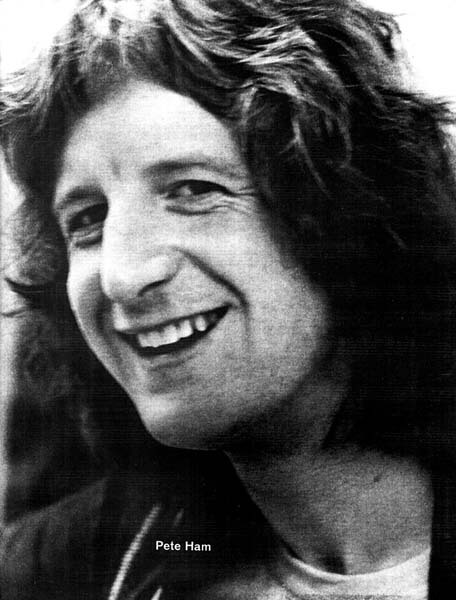
Pete Ham
Frontman of Badfinger, who gave us more than a couple of wonderful songs in the '70s. "Baby Blue" absolutely wrecks me every time.

Chris Bell
Best known as one of the founders of Big Star, though he didn't stick around for long. His solo hit (well, among power-pop aficionados), "I Am the Cosmos," is pure magic.

D. Boon
Leader of the Minutemen; not my favorite postpunkers, but a truly unique band. Also, anytime you want to piss off a hipster rock geek, tell them Double Nickels on the Dime sucks.

Wikipedia has a nerdily comprehensive list, of course. So why 27? What is it about that age? Is that the year when the hard living of popular music catches up with the hardest-living? Let's discuss. In the meantime, pray for your favorite early-twenties rock star.

July 19, 2011

Game show chronicles: Name That Video

Someone recently asked me, you know, since I'm such a game-show guy, had I been on a lot of TV game shows. "Not a lot," I said. Which is true…technically. Because while I have physically appeared on a mere two TV game shows, I have experienced close encounters with several more. The tale of the tape:

—I was on Name That Video, a short-lived VH1 show
—I was someone's Phone-a-Friend on Who Wants to Be a Millionaire?
—I made it to a callback for Don't Forget the Lyrics
—I was nearly on Cash Cab (interesting story, that)
—And oh yeah, I lost on Jeopardy!, baby

So while "not a lot" is true, it's a fairly misleading answer, at least compared with the experiences of 99.999% of all human beings who have ever lived.

And because these are stories I'm asked about with some extreme degree of frequency, starting today, I'm going to chronicle them in this space, one by one. Starting with…


It's early 2001, and the Big Quiz Thing is a dim future dream buried deep behind my current ambition, stand-up comedy. I was working hard at it—performing sets multiple times a week, for no pay, though I had a fair amount of…eh, let's say potential, if not empirical talent. I was also working full-time at a day job, for a website that was a hybrid publishing magazine/bookstore and very ambitiously planned on taking away 10 percent of Amazon.com's sales. Basically, the kind of thing that would have no business existing in the world of two years later.

Much of the stand-up comedy life involves hanging around with other comics, waiting for your set, politely checking out the competition, fishing for praise after a successful set. You run out of things to talk about, so you talk trivia, and I imagine I became better admired in the NYC-comedian community for my impressive stash of trivial knowledge than for my stand-up ability. I was particularly adept at music trivia, having spent most of my life as a grade-A rock nerd. My book of Billboard Top 40 statistics was shredded from overreading by the time I finished high school; I'd moved to NYC specifically to be a music critic. Even earlier, as a rather unique seven-year-old, I would wander from room to room on Sunday mornings, trying to get good reception of American Top 40 on my radio-only Walkman. Once I could master the technology, I set the VCR every Friday night and would spend the next morning in my pajamas watching Friday Night Videos (we didn't get MTV in my town). Remember this?


I always wondered about the appropriateness of the firing-squad imagery. What's the idea there? Music videos would set you free? Gary Gilmore is an idol to teenagers? Video abolished the radio capital-punishment star?

So one night on the stand-up scene, a certain comic—whose name you just may be familiar with—told me of an opportunity: VH1 was working on a new game show, Name That Video, and they were desperate for good contestants. He himself had aced it—he won a car!—and he passed along an e-mail address. A week later, I skipped out of the day job for a few hours to sit in a TV production room and watch and identify videos, as part of the audition. The only one that even remotely stumped me (though I ended up guessing right):


"We'll let you know in the next couple weeks," the contestant coordinator told me. "In the meantime, the show debuts tomorrow—you should watch it!"

And I did. Many times (it was on, like, four times a day). Round 1 was your typical three-people-with-buzzers shebang, but kicked out as a a big multimedia quiz on music-video-related trivia. Round 2 pitted the top players from Round 1 head-to-head in a classic, bullshit-drama-milking "Name That Tune" format ("I can name that video in three seconds…"). Round 3 was the lone survivor, tasked to name the ten videos on the screen in 60 seconds; he gets $500 for each one correct. Get all ten, it's a Toyota Forerunner SUV and every disc in VH1's recent list of the 100 Greatest Albums of All Time. Back when CDs were still awesome.

So I watched the show several times. Reliably, in the final round, playing along at home, I aced about eight of the videos, and was clueless on two others (I recall a Savage Garden number that completely escaped my memory). "All right," I thought. "If I make it to the final, I'll take home $4,000. Not bad for an afternoon."

But as I waited for the call, my life changed. The following happened to me in a 48-hour period: (a) my girlfriend of six months dumped me (she was also my neighbor; that was fun); (b) one of my closest friends had a nervous breakdown and talked my ear off on the phone for three hours at a time, before suddenly picking up and leaving NYC; (c) I was laid off from my dot-com job. The noble website experiment was failing, it was time for the first round of layoffs, and they figured they could do without me. (The only copy editor. On a website about reading and publishing. Yeah.)

Immediately after I got the (c) news, one of my bosses took me out for a drink. Commiserating was in full swing (he knew his job was next on the chopping block) when my phone rang: "Hey, it's Sarah from VH1! You wanna be on Name That Video?"

"Sure," I said. Money! (Though if I came in third place, I think I would take home a VH1 beach towel.)

"Can you come to the studio on Tuesday at 1pm?" Of course—as of today, I had nothing better to do on a Tuesday afternoon.

Despite my relative confidence/excitement about this event, I didn't mention it to anyone, and I don't exactly recall why. Fear of failure? (Perhaps; that fear would have served me a little better during my later Jeopardy! experience.) It didn't seem necessary. I got up that morning, ate some cereal, waited till 12:15 and rode the subway to the midtown studio.

My opponents were a fellow male nerd and a personality-free young woman (neither of whom had followed the instruction to bring two changes of clothing, so when we were all wearing black, I was the one who had to change out of my preferred lucky shirt. So I followed the rules, and I'm the one who had to accommodate others: this is why I hate the world). The bulk of the game was rather unremarkable; I discovered that being able to name videos was a lot less important than being able to identify songs. For example, in Round 2, I had two seconds to name this video:


Which I had no memory of having ever seen before. But I'd heard the song, oh, a couple billion times, and two seconds of its distinctive guitar strains were all I needed. I could've done it blindfolded, honestly.

So indeed, I made it to the finals. Why don't you watch for yourself? (We used this clip at a BQT edition several years ago—players had to name the videos I named. Fun, right?)


Man, I was a young punk. Also, that hostess was kind of not my favorite person. She was really cold and distant to me before the round, then was my best buddy once I won. (We're celebrating our tenth anniversary next month.)

It was a truly surreal experience, in that despite whatever confidence I felt for my skills, in reality, I was not at all expecting to win. Emotionally, I was completely unprepared, and the mixture of surprise and delight was potent. I personally find that few things in life really, truly, unambiguously feel good—nearly every positive feeling or victory is attended to by some degree of regret, some slight misgiving. But hot damn, this felt nothing but good.

Twenty minutes later, I left the studio and found myself walking back toward the 1 train, back home. I'd just won a car, on TV, but I had nowhere to be, no one to see, nothing on my agenda. I got home, called a couple friends, called my parents (who finally began to believe that maybe they didn't throw all their money away letting me study pop culture in college). And I started living in my new jobless, womanless, but victory-full new reality.
So what about the car? Well, I lived (and still live) in Manhattan, so fuck knows what I'd do with an SUV. But the dealer (in Jersey City) offered to buy it back from me for $23,000. The car's blue-book value was $34,000, and for $11k, I figured I should get to take it for a weekend or something, but no dice. This is the dark secret they don't tell you about TV game shows: You have to somehow deal with that crazy crap you win. (No room in your apartment for a dinette set, Price Is Right champion? Tough shit.) They also don't tell you, but you can guess, that Uncle Sam gets his piece—my accountant told me about some special form for "sweepstakes winnings." All told, I cleared about $20,000. Good enough.

I tried to use the experience to make hay on the stand-up circuit; I figured the money meant I didn't need to freak out about finding a new day job, I could hustle the odd freelance gig and focus on comedy for a while. Meanwhile, simply the notoriety of having won a car on a VH1 show was good for a few impressed noticings and bookings, though that didn't last long. There's no guarantee that the musical polymath is actually funny, you know. (I was reminded of this recently, when I ran into a comedian I knew from those days who had clearly never found me amusing. He told me he thought it was great I was still doing the Big Quiz Thing—"It's so good to see someone do something that's so perfect for them." Actually, I rather liked the compliment.)

And oh yeah, the CDs: Two months later, I received a big, dented cardboard box full of 100 compact discs, still covered in price tags from the Virgin Megastore. Half the jewel cases were cracked, and the intern (I'd imagine) who picked them out gave me the soundtrack to the short-lived Saturday Night Fever Broadway musical soundtrack, rather than the kazillion-selling movie soundtrack. I sold that one and a few others (sorry, I cannot stomach Madonna's Like a Prayer) and gave away ones I already owned to friends, but I kept most, even ones I wasn't particularly interested in listening to. These were widely considered some of the greatest albums of all time, so it could only help me to build up my library. I was preparing for some kind of trivial-knowledge revolution in my life, and it was only a couple years away.

July 18, 2011

The pros and cons of multiple-choice questions

So tell me: The multiple-choice question format is (a) a perfectly fine tool in the quizmaster's arsenal, or (b) a regrettable but handy structure for certain quiz games and questions that demand it, or (c) totally lame and a sign of a waste of quizzing time. You wonder why almost all smartphone trivia apps suck? It's because technology hasn't advanced to the level where you can properly answer a real question on a tiny phone. (Plus, they remind me of standardized tests.)

My answer used to be (c), but lately, I'm not so sure. If you're familiar with the Big Quiz Thing, you may know that I very occasionally utilize the multiple-choice format for my questions. There was an example at our most recent quiz spectacular, to wit: "What’s greater: (a) the number of billions in Mayor Bloomberg’s net worth, or (b) the number of Americans richer than he is?" I dug this question: It took an interesting but basic fact (Bloomberg is crazy rich) and made something more creative out of it than just "How crazy rich is he?"
Some people really like multiple choice; on the surface, it seems to make questions easier, and the challenge-averse are legion. But as a general rule, I very rarely use it. In fact, I've long considered myself to have a bias against multiple choice. Some reasons:

They take too long to ask. An ideal question is an economic one. That's not a hard-and-fast rule, but basically, the more you have to say to ask the question, the worse off you are. Listing the correct answer and two or three others has the habit of slowing the whole process down to a crawl.

They're very easy to mess up. An unseasoned trivia writer often falls into uniquely regrettable traps when working in multiple choice (unlike the pitfalls that a seasoned quiz writer falls into). One thing that particular chaps my hide is stupid multiple-choice questions that flat-out give away the correct answer. I can't find the example, but I once read an explicitly labeled "food and drink" quiz, with a question that included four possible answers: (a) and (c) had nothing to do with food or drink, and (d) was clearly a joke answer. Um…which ever one could it possibly be?

They're less fun. The whole mental journey of getting from question to answer, of discovering the correct response, seems less interesting and enjoyable when your options are so clearly narrowed down. If the question is figureoutable, in some respects, it's already been figured out for you. Or, if you're confident of the answer and proud of your own knowledge, you may feel cheated that you don't have the opportunity to pluck it from your mental foam without any extra assistance. Which leads me to the most important point…

Multiple-choice questions give away the answer. Really. Not that they necessarily tell you which answer is correct (though see that food-and-drink example above), but they do indeed state the answer right off the bat. Even if it's among other, incorrect ones, it's been put out there, so there's no real "a-ha!" surprise moment of interest when the quizmaster reveals which response is the right one, let alone when you manage to figure it out on your own. Multiple choice sucks some of that juicy drama from a great quiz game.
But recently, my thinking has changed a bit. Not long ago, I was hired for a quiz writing/consulting job, and the client asked me to provide 50 trivia questions. No problem; I sent them some of my best. To which I got an e-mailed reply (paraphrasing):

"Oops, sorry! Maybe I forgot to tell you, but I needed multiple choice questions!" (Actually, reviewing my notes, I was told this, but several months earlier when we'd first made contact, and neither party had reiterated the point in subsequent discussions. So blame is shared.)

Being the awesome quiz problem-solver I am, I was able to modify most of the questions to accommodate the format, no sweat. But part of me kept thinking they'd ultimately be happier if we'd left them as is, multiple-choice-free. In modifying them, I felt like more than a few of the questions lost some of their zip.

However, as I entered the next phase of this particular project (sorry, have to be vague on details; I signed a nondisclosure agreement), I realized that I was wrong: For this particular project (an excellent one, I might add), multiple choice was likely the way to go, or at the very least, a valid avenue well worth pursuing. And I started seeing the particular advantages, such as:
Sometimes slowing things down is good. What TV game show comes to mind when you think of multiple-choice trivia? Right, Who Wants to Be a Millionaire? And that show is all about slowing things down, to extend the nail-biting drama. Sure, like the rest of the world, I'm completely sick of that damn show by now, but man, no denying that back in '99, that was some of the most compelling TV out there.

Sometimes easier is better. The best question is easily recalibrated for different levels of difficulty. Often, multiple choice is the way to do that: When taking a trip into new territory, it helps to have a map, even if it's a rough one. Yet at the same time…

They introduce a unique element of challenge. A canny multiple-choice question might give you two (or more) possible answers that seem equally valid. Take this one: "On the air from 1955 to 1975, what TV Western is the only American comedy or drama show to exceed 600 episodes? a. Gunsmoke; b. Bonanza; c. Rawhide." Perhaps your first impulse is to say Bonanza—I mean, how else did Michael Landon become such a big star?—but then wait, the quizmaster did say Gunsmoke, maybe your initial impulse was wrong. So Bonanza or Gunsmoke, which is it? Or perhaps it was Rawhide; I mean, all of these shows went off the air so long ago, they all sound plausible to anyone under the age of 45. Multiple choice can lead you to doubt and rethink your thinking in a way you might not with a simple fill-in-the-answer query, inspiring a whole new, often very enjoyable routine of mental gymnastics. You get to experience a different way of thinking through a trivia question.

They add a nice opportunity for comedy. Want to build a little laugh into an otherwise perfectly valid trivia question? Tack on a funny, obviously wrong (d) answer. That TV-Western one above? (d) The Lone Ranger/Howdy Doody Racial Stereotype Comedy Adventure Variety Hour (Fine, not the greatest joke, but the possibility is there.)
So what's my answer to the question stated at top? (a), (b), or (c)? Have I swung from (c)—multiple-choice hatred—to (a)—respect for it as a staple of the quizmaster's tool belt, granting multiple choice the status of perfectly reasonable trivia format? Eh, not quite. On balance, I think open-ended is more fun, more appropriately challenging, more creative. So let's call it (d): Multiple choice is a helpful tool, and it's a good thing for a quizmaster to have a strong understanding of. But if you want it to take center stage in a Big Quiz Thing project, you're going to have to be the one paying the bills.

July 5, 2011

Anatomy of bad trivia questions

Last week, I analyzed what I consider a nigh-perfect trivia question, discussing what I feel makes it such a sterling example of the quizmaster's art. Strutting my peacock feathers, sure. But to keep it fair and balanced, I promised to look at the opposite side of the coin: lousy trivia questions, and what makes them so bad.
I've written thousands of questions over the years, and some were just flat-out rotten. Perhaps the worst were the ones with which I failed due diligence; for whatever reason, on rare occasions, I just plain didn't do my homework, and ended up asking a question that is factually wrong. (Really? The first female U.S. senator was elected in 1986?!?) There are a million moving pieces to every Big Quiz Thing event, so it's inevitable that every now and again something slips through the subway grate. But the truth should never be one of those things, so it kills me when it's happened, as rare as it is.

But as soul-crushingly crappy as baldly wrong questions can be, that's not what I want to look at here, because I think their badness is self-evident. I want to dig a little deeper into what can make for a piss-poor trivia question. And rather than examine one shining example, as I did when looking at the perfect question, let's examine two that are varied in their suckitude. "Enjoy"…

Q: This is the essence of trivia: Within 50, how many dimples does a modern golf ball have?

I actually said that when I asked the question: "This is the essence of trivia." And I suppose I was right, if you adhere to the traditional definition of trivia, which is "useless knowledge." But over the years, I've come to prefer working with a different definition, which is "interesting information." (Plenty of trivia questions are about dumb bullshit, but just as many other deal with knowledge that's well worth having. There is literally no topic that can't produce a good trivia question, under the right circumstances.)

There are several major problems with this golf-ball question:

(1) It's not easy to verify. Search the Internet and you will find many answers to this question, none of them passing my reliability test. Moreover, I gather that there's no official number of dimples for regulation balls, so it's perhaps ultimately unverifiable.

(2) It's impossible. Not even remotely figureoutable (all right, fine, I suppose some incredible, ultraevolved physicist or mathematician might be able to take a stab at a designing a model that will give him an educated guess, but come on, we're trying to enjoy ourselves here). Also, I don't know what school you went to, but you were most likely not taught this as a youngster, so there's no digging-through-your-memory element here.

(3) It's cliché. This same question has been asked a million times in a million places, judging by ye olde Interwebs; my little "essence of trivia" disclaimer hints at it. I essentially ripped this question off from various anonymous sources. I mean, geez, if I'm going to be a thief, I should be more discerning, shouldn't I?

And perhaps most importantly, (4) it's just not very interesting. The answer is 360 (or at least that's what I declared it to be when I asked this at the BQT). Big fucking deal. An impossibly difficult question might be worth something if, at the very least, a player feels they've been enlightened once they hear the (verifiably) correct answer. (Really? The Mr. Men books were the U.K.'s best-selling kids' series of the '00s after Harry Potter? Hm.) But with something like this, the audience is left with nothing. This question provides neither fun nor victory nor knowledge, just a big pile of boring, obscure, squishy information. Terrible.

And this stinker:
Q: In the film This Is Spinal Tap, how did the band say their first drummer died?

This was actually the very first question asked at the very first Big Quiz Thing, and it's terrible. (Though in hindsight, a lot was terrible that night.) Spinal Tap is easily among my favorite films, and many others would agree, so it is definitely prime trivia-question fodder—it was an answer to a great four-parter about fictional rock bands (the Thamesmen!). But this query doesn't qualify. It relies on one's memory of a minute detail from the movie (a funny detail, but small)— not figureoutable. Moreover, it's a bit of a trick question, isn't it? Everyone remembers the drummer spontaneous combusting, and many others recall that another drummer "choked on vomit." But yes, the very first drummer (played in a cameo by Ed Begley Jr.) died in "a bizarre gardening accident." So it's a bit of a swerve to put this little-known aside front and center. And, perhaps most importantly, I asked this as the very first question of the night! Of the first BQT!

This gets at a very important yet overlooked element of quizcraft: Question order and placement is nearly as important as the content of the question itself. Sure, I could've asked about the bizarre gardening accident in a later round, perhaps at a movie-specific quiz. It would've been a toughie, but fair-enough game. But as my opening salvo of my quizmaster career, it was a bad move, indicating that perhaps I subscribed to the dicky you-have-to-know-everything-ever-to-succeed school of trivia, rather than the, you know, actually fun one.. Thankfully, the nerds there that night forgave me, I recovered, and went on to my glory as the greatest quizmaster who ever strode the face of this world.

What do you think? Are these questions really so bad? What do you consider the hallmark of a trivia clunker? Share your discerning voice!